


Interesting Reads
Four pieces of published science about the sky and the desert we work in, each summarisedand followed by its source.
Read 2
Why the World’s Telescopes Came Here
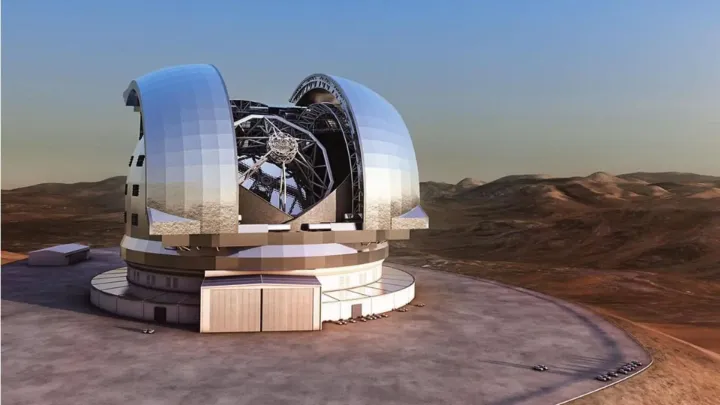
About 50 kilometres east of San Pedro de Atacama, Chile has set aside 363.81 square kilometres of high desert for science alone. A 2014 paper by R. Bustos, M. Rubio, A. Otárola and N. Nagar describes this reserve, the Parque Astronómico de Atacama, and explains why it may be the best place on Earth for millimetre, submillimetre and mid-infrared astronomy.
The reason is dryness. Water vapour absorbs these wavelengths, and here there is almost none. The region lies under the descending branch of the Hadley circulation, where the southeast Pacific anticyclone keeps the air stable. A coastal range more than 2,000 metres high blocks moisture from the ocean, and the Andes hold back the humidity of the Amazon basin. On the Llano de Chajnantor, at 5,050 metres, the annual median of precipitable water vapour is about 1.1 millimetres. On the summit of Cerro Chajnantor, above 5,600 metres, it is roughly 36 per cent lower. The authors find the area typically drier than Mauna Kea, with the summit offering the best submillimetre conditions twice as often as the plateau or the South Pole.
The land has been protected for science since a 1998 presidential decree and in 2013 was granted in a 50-year concession to CONICYT, Chile’s national science agency. It is home to ALMA, APEX, the Atacama Cosmology Telescope, ASTE, NANTEN2 and others.
SOURCE
R. Bustos, M. Rubio, A. Otárola and N. Nagar, “Parque Astronómico de Atacama: An Ideal Site for Millimeter, Submillimeter, and Mid-Infrared Astronomy,” Publications of the Astronomical Society of the Pacific, 2014 (arXiv:1410.2451).
https://ar5iv.labs.arxiv.org/html/1410.2451